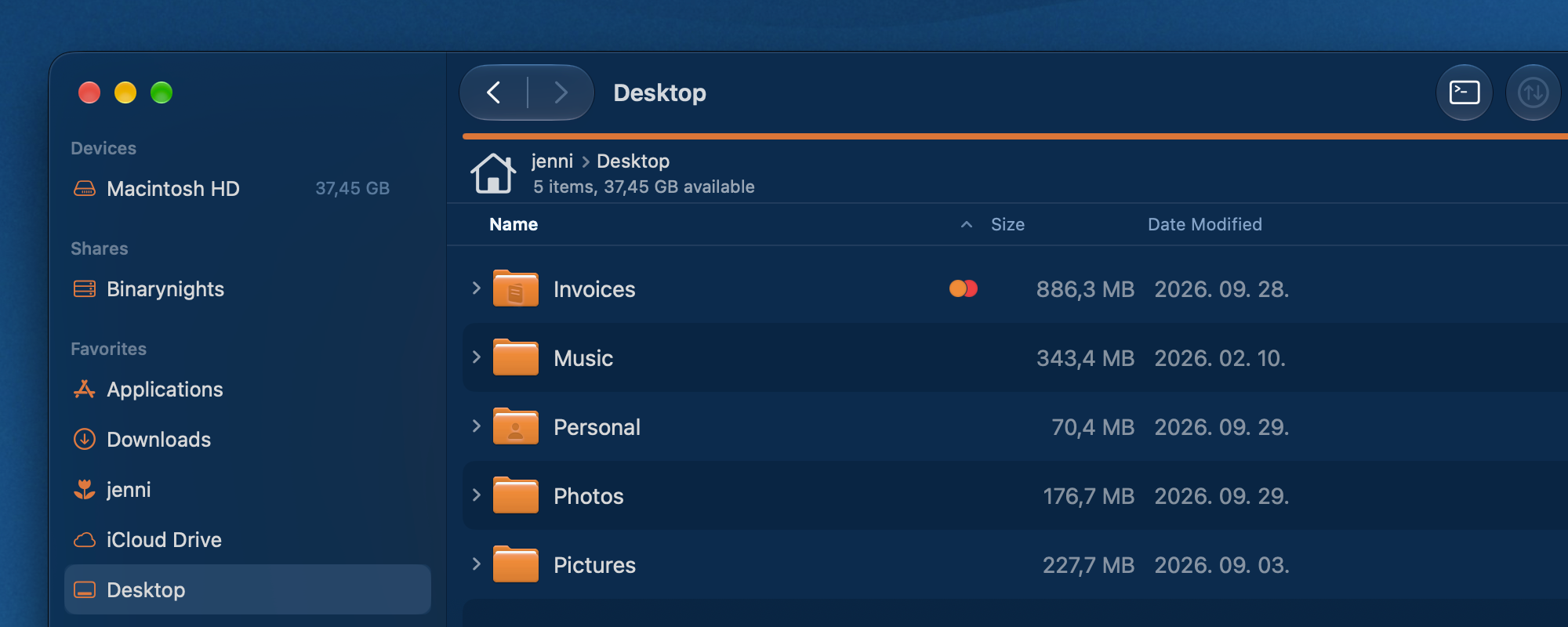
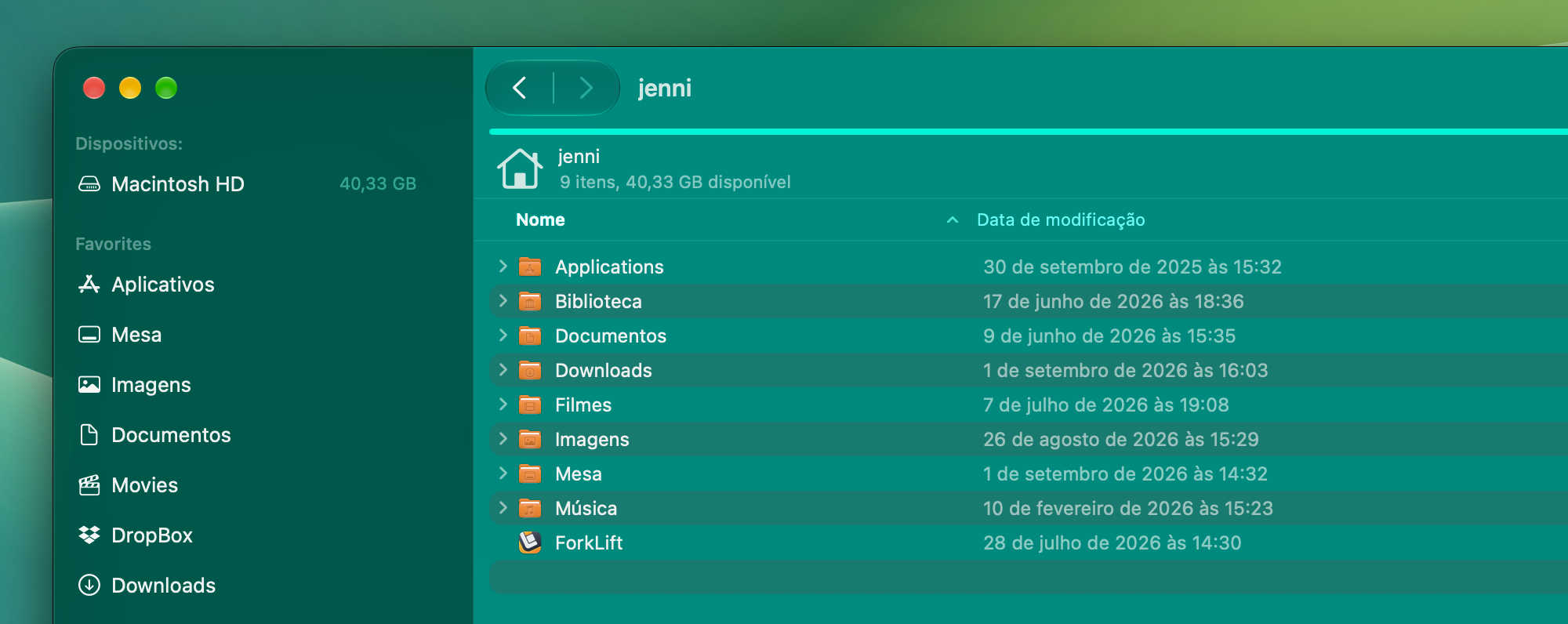
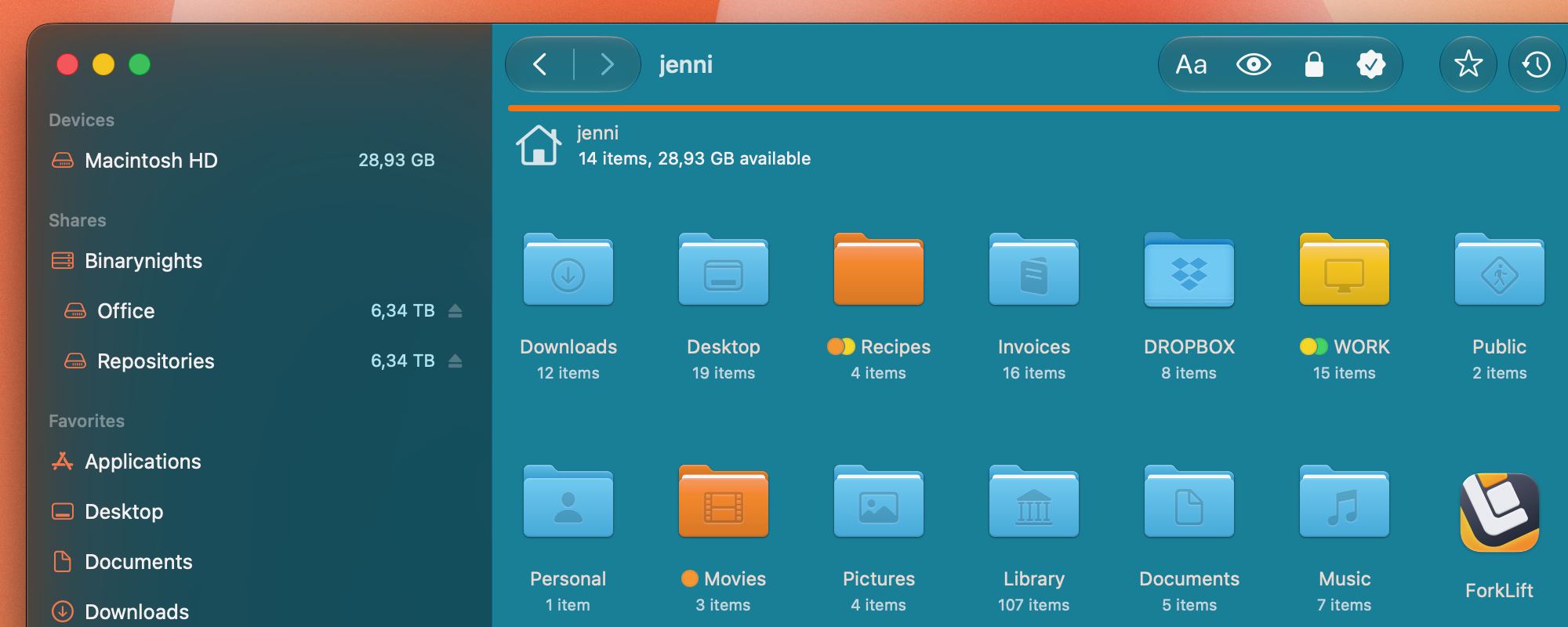
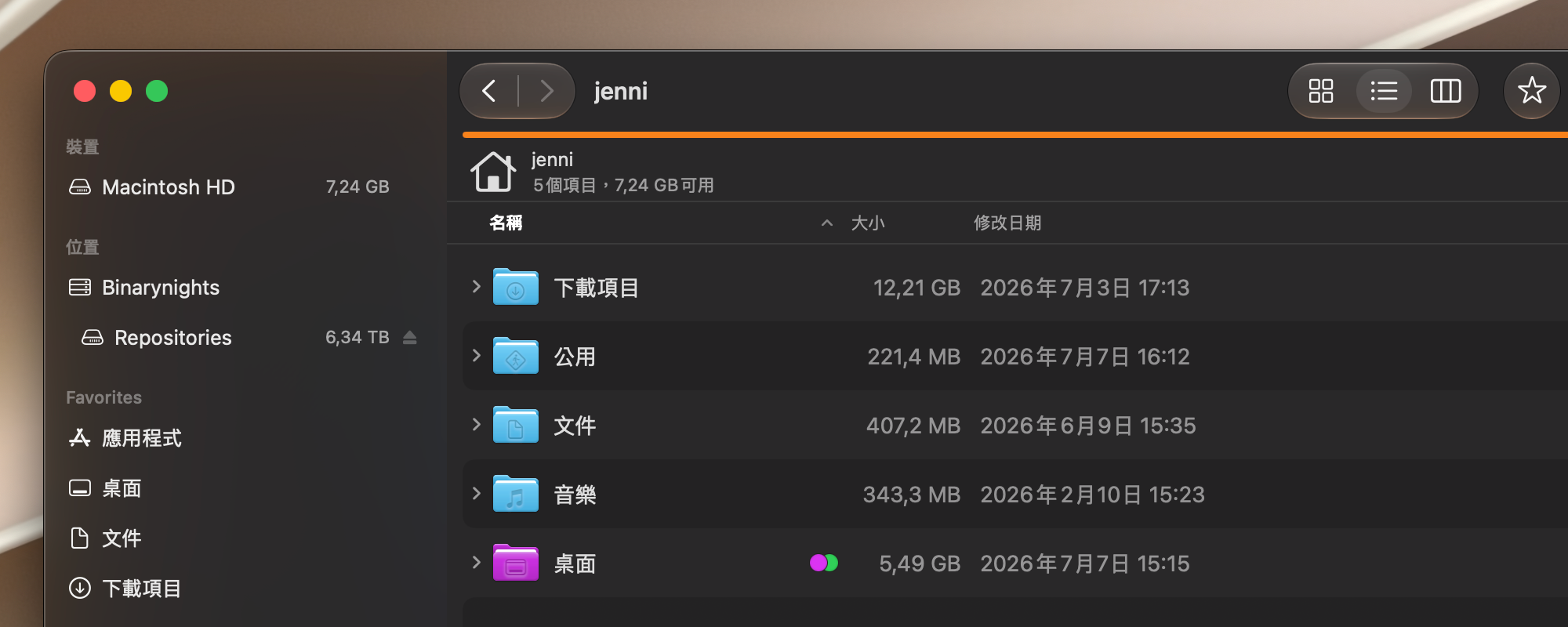
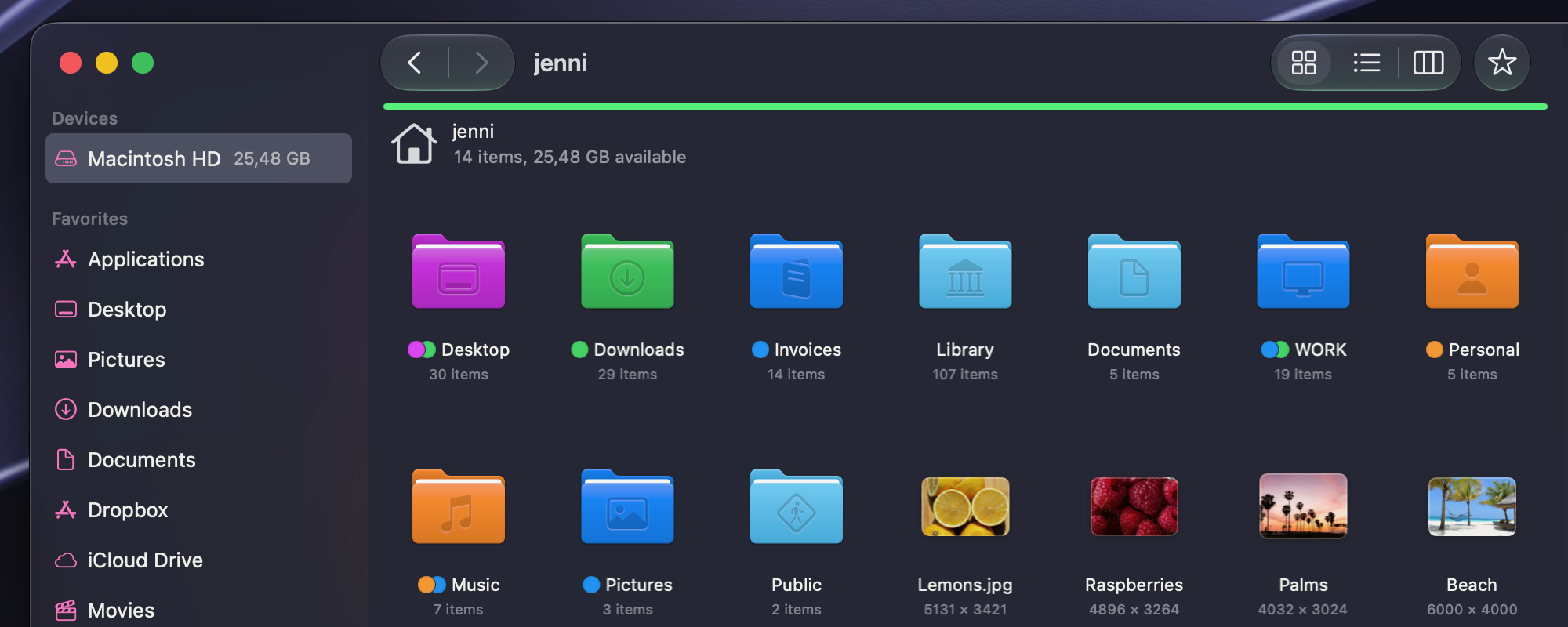
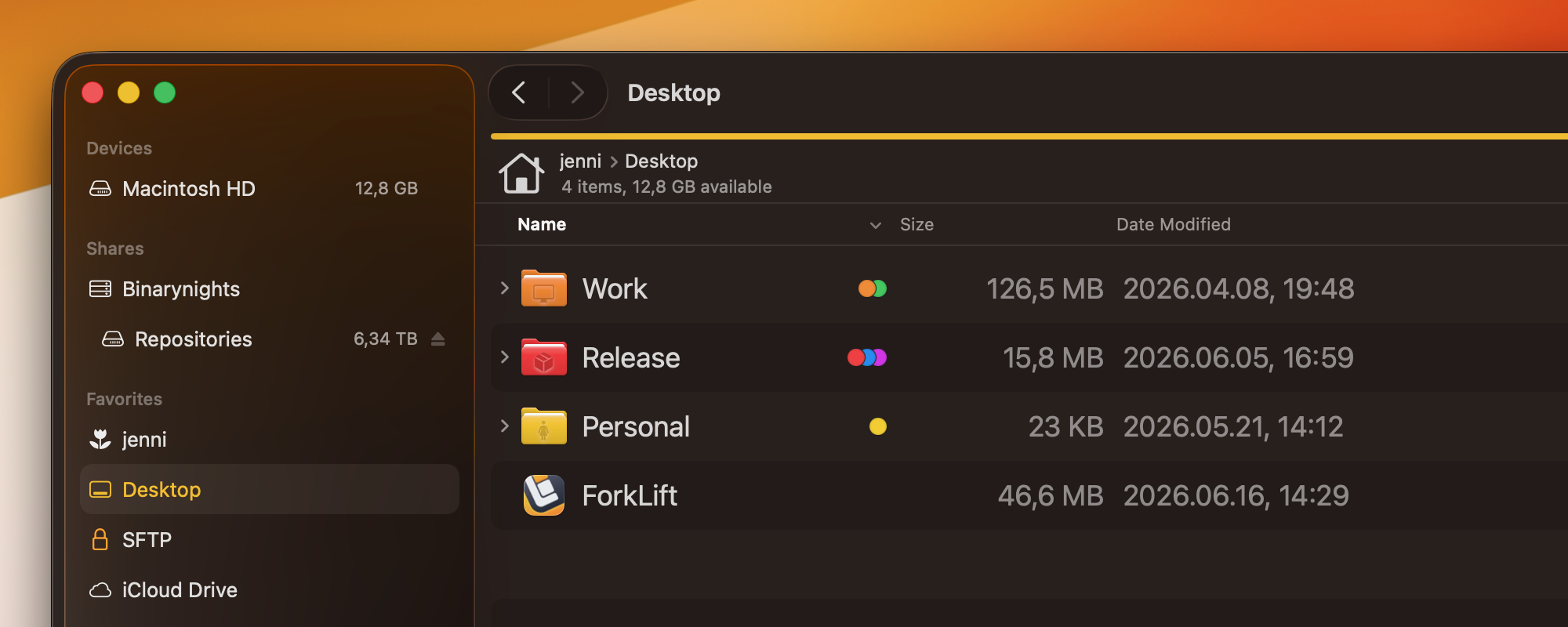
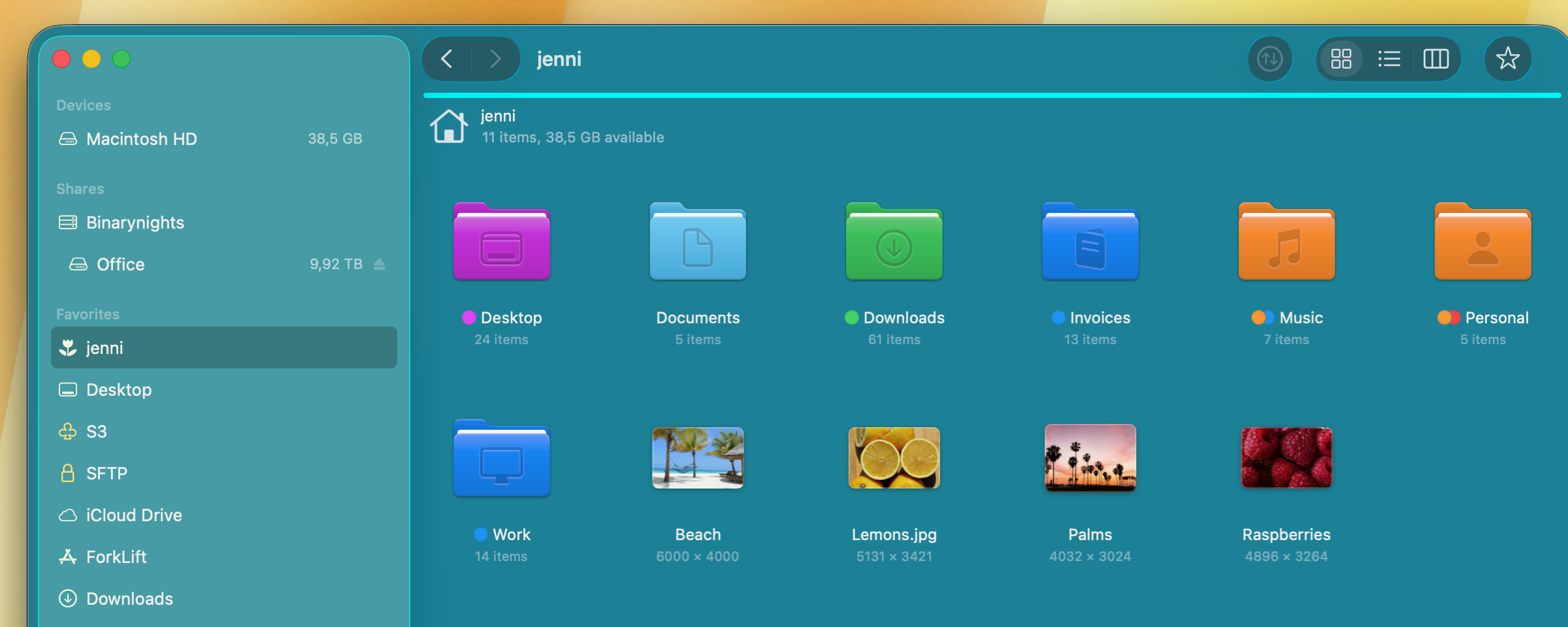
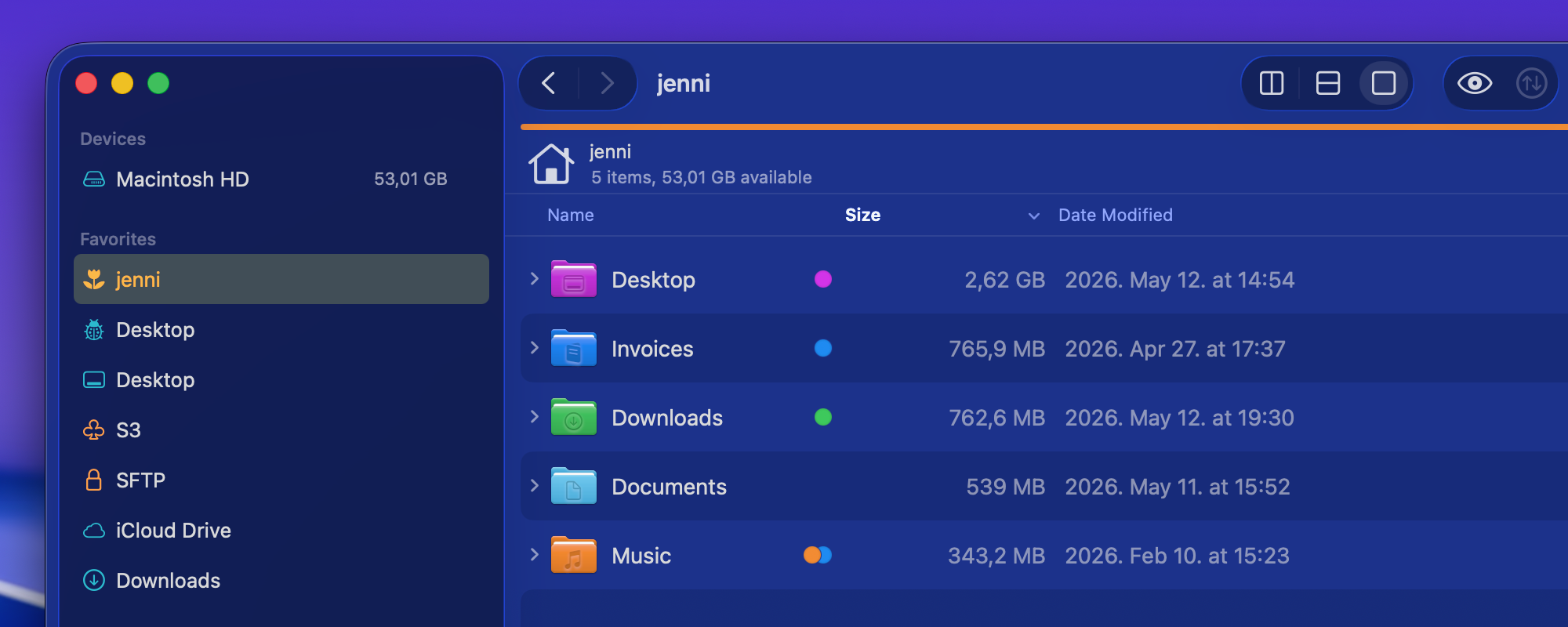
In ForkLift 4.7.3, our main focus was on Icon View. We brought back some of the behavior from earlier native macOS versions that had disappeared over the years and was not included in ForkLift 4.
You can now navigate across rows with the arrow keys, so navigation no longer stops at the end of a row. It is also possible to select a range of items, even across multiple rows, by holding down the Shift key and clicking the first and last item in the selection. You can extend the selection further with either Shift-click or Command-click.
We also improved drag selection in Icon View. Previously, selecting multiple items with the mouse could sometimes be difficult because dragging would start instead of creating a selection. The dimensions of items are now better defined, making the behavior of dragging and drag-selecting much closer to what you see in Finder.
We believe these improvements make working in Icon View much smoother and more intuitive.
Full List of changes:
New
In Icon View, you can navigate to the next row by pressing the Right Arrow key at the end of a row
In Icon View, you can navigate to the previous row by pressing the Left Arrow key at the beginning of a row
Range selection with Shift-click in Icon View
Open in New Window context menu item for tabs
Home and End keys in Icon View to jump to the beginning or end of the file view
Improvements
Improved drag selection in Icon View
Improved stability and performance to help prevent possible crashes and hangs
Version 4.7.2 is a quick update that fixes some issues introduced in versions 4.7 and 4.7.1 related to the Multi-Rename feature.
A bug introduced while adding the option to use metadata for renaming files prevented previously saved Multi-Rename favorites from being used. We have now fixed this issue, and old batch rename favorites should work as expected again.
We have also added a text field for defining custom date formats when using dates extracted from metadata. In addition, this version adds Traditional Chinese localization to ForkLift and changes the item info displayed in Icon View to show file sizes. The update also includes other small fixes and enhancements.
Full List of changes:
New
Displays file size below the icons in Icon View when the “Show Item Info” setting is enabled in the View Options
Traditional Chinese localization
Improvements
Adds a missing text field to specify the custom date format in the Multi-Rename Window when adding dates based on metadata
Fixes
Fixes an issue introduced in version 4.7 that made it impossible to use previously saved Multi-Rename favorites
Fixes a possible crash when generating thumbnails
Improves the wording of the warning message shown when file conflicts occur during copy operations
Smarter File Naming with Built-in Metadata Support
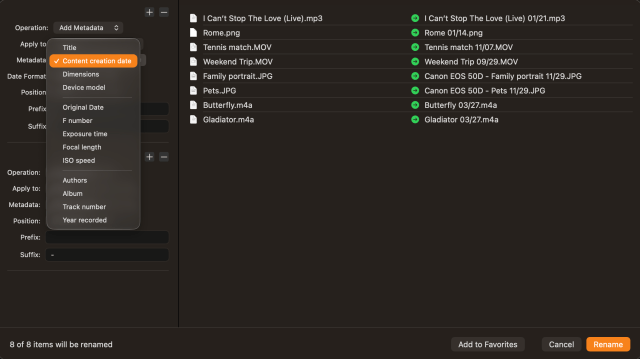
In ForkLift version 4.7.1, we have added a major new feature: the ability to include metadata in multi-renaming operations. This means ForkLift can now read and use the information stored inside files, such as photos, videos, documents and audio files, when renaming them.
Metadata is information attached to a file that describes it. For example:
For photos: when the picture was taken, camera model, exposure time, ISO value
For audio files: artist, album, track number, year, or title
For documents: author, creation date
In ForkLift, you can use the following metadata fields when renaming files:
Title
Content creation date,
Dimensions
Device model
Original date
F number
Exposure time
Focal length
ISO speed
Authors
Album
Track number
Year recorded
Using metadata allows you to turn automatically generated or meaningless filenames into structured and meaningful ones.
For example, instead of:
IMG_2481.JPG
you can rename files to something like:
2025-06-28_Budapest.JPG
This makes your photo library immediately more readable and easier to navigate without opening files. For large photo collections, this is especially useful because it automatically organizes images chronologically and keeps naming consistent across thousands of files.
The same applies to audio files. For example:
track01.mp3
can become:
Madonna – Like a Prayer.mp3
This helps fix messy downloads and creates consistent music libraries where every file follows the same structure, making albums easier to browse and keep in order outside of music apps.
Besides the new metadata support for batch renaming, power users will also appreciate that the $PATH environment variable can now be used when creating tools in ForkLift.
Smoother SMB Integration, Richer Media Previews, and Enhanced Stability
We have also improved SMB share handling: share names are now displayed in the same way as in Finder, ensuring consistent behavior between the two apps.
In addition, ForkLift now supports previewing certain video and audio files (for example: .mka, .mkv, .webm, .wma, .wmv,. avi, .mov, .flv, .f4v) when using the third-party QuickLook Video app. Previously, these previews were only available in Finder, but ForkLift can now display the same previews when the QuickLook Video app is installed correctly.
ForkLift version 4.7.1 also fixes several minor issues in the Go to Folder window. The update resolves a crash during sync operations when excluding items based on file size, and fixes a significant issue on the upcoming macOS 27 “Golden Gate,” where dragging items in column view was not possible. We are not currently aware of other issues on this new macOS version.
The update also includes additional fixes and improvements. Please see the full changelog below.
Full List of changes:
New
Option to use metadata when renaming files in the Multi-Rename window
Tools can inherit the $PATH environment variable from the shell
Improvements
New metadata added to the Info Window
Aligns SMB share names with Finder for consistent display
Updates the divider color between preview and info sections in the Preview Pane for better visibility in dark themes
Adds support for previewing media files in ForkLift when the QuickLook Video app is installed
Improves undo logging behavior for Multi-Rename operations
Fixes
After changing the default application for a file type, the change is now saved correctly
Fixes an issue where the entire path in the Go to Folder window was selected after choosing a path from the dropdown using Tab or Right Arrow
Fixes an issue where duplicate paths could appear in the Go to Folder history
Fixes an issue where selecting a path from the Go to Folder dropdown opened the item instead of revealing it in the file view
Fixes an issue in the Go to Folder window where pressing Tab or Right Arrow after entering / inserted a second slash
Fixes a possible crash when entering a path starting with ~ in the Go to Folder window on Amazon S3 connections
Fixes a possible crash when selecting Size as an exclusion filter in the Sync Window or when opening the Sync Window with a previously saved file size filter
Fixes an issue where the location of a pinned tab could change to a subfolder after switching between column view and other views
Fixes an issue where reordering remote favorites in the sidebar was not always possible
Fixes an issue where rotated video dimensions were displayed as negative values
A small update focused on usability improvements and fixes
ForkLift 4.6.4 brings a collection of small improvements and fixes that make everyday use of ForkLift smoother and more convenient.
Two notable enhancements focus on file navigation. Quick Select now recognizes accented letters, making it easier to find files whose names contain accented characters. In addition, the Go to Folder window can now recognize and locate aliases and symlinks, improving navigation throughout your file system.
Full List of changes:
Improvements
Adds warning before deleting a theme from the Settings to avoid accidental deletion
Small GUI enhancements
Quick Select is able to find accented letters
Go to Folder is able find aliases and symlinks
Fixes
Fixes an issue in Column View in rename mode where the selected file name could float over the other files when scrolling
Fixes path bar inconsistencies
Fixes the Quit and Keep Windows command in the Keyboard shortcuts in the Settings
Makes the Sync to command inactive while one pane is in search mode
Fixes a possible hang while changing themes in the Settings
In ForkLift 4.6.3, we added Item Info in Icon View. When enabled, it shows the number of items in folders, along with additional details such as video duration and image dimensions. You can enable this option in Icon View via View > Show View Options > Show Item Info. Keep in mind that each tab has its own settings, so you need to enable it in every tab where you want it to appear. When opening a new tab, it inherits the settings of the active tab, so the Item Info setting will carry over automatically. Displaying this information requires additional system resources, so you can disable it at any time under View > Show View Options > Show Item Info.
The Preview Pane and Info Window now display additional information for audio files.
Navigation Improvements: Go to Folder and Keyboard Enhancements
An additional new feature is the option to add the $SOURCE_HOSTNAME and $SOURCE_USERNAME placeholders while creating a tool in the Settings. These placeholders let your scripts automatically access the current remote connection details. This makes tools more flexible because they can run on any server without hardcoding hostnames or usernames. As a result, you can create reusable, context-aware automation.
In this new version, we have added a lot of enhancements to the Go to Folder feature. The Go to Folder feature is useful because it lets you jump directly to any directory by typing its path instead of clicking through multiple folders. You can activate the Go to Folder pop-up with the Command-Shift-G keyboard shortcut (or from the Go menu). We have added a history section to Go to Folder, making it easier to find previously visited locations. Compared to previous behavior, the top match is now the location itself, not a subfolder, which makes navigating to the correct path easier. You can navigate the list of suggested locations using the up and down arrow keys. Pressing the right arrow will insert the selected suggestion into the path, allowing you to continue typing and refine your search as new matches appear. Once the path is correct, press Enter to open the selected location.
Now you can expand and collapse folders not only with the right and left arrow keys, but also using Command key combinations (Command-Right Arrow, Command-Left Arrow), matching Finder behavior. This brings back a familiar interaction that some users missed due to muscle memory.
Full List of changes:
New
Available Item Info in Icon View, which can be enabled in View Options
History of previously visited locations in the Go to Folder pop-up
Option to add the $SOURCE_HOSTNAME and $SOURCE_USERNAME placeholders in the Tools section of Settings
Improvements
Enhanced Tab key behavior for selecting matches in the Go to Folder pop-up
Right Arrow key now behaves the same way as the Tab key in the Go to Folder pop-up
Multiple improvements to navigation in the Go to Folder pop-up
Displays more information about audio files in the Info Window
Option to expand folders using the Command-Right Arrow keyboard shortcut
Option to collapse folders using the Command-Left Arrow keyboard shortcut
Fixes
Adds back the Open in New Window context menu item for workspaces in the sidebar, which went missing in version 4.6.2
Fixes an issue that caused the Theme Editor not to close when the Settings window was closed
External Drive Tags, comments, and Checksum Improvements
We recently introduced the ability to calculate checksums for files, making it easier to verify that files have not been altered or corrupted during transfers and that two files are truly identical. Checksums can be calculated for multiple files at the same time, with the file names and checksums displayed in a dedicated window.
In ForkLift 4.6.2, we improved the usability of the Checksum Window by adding support for selecting multiple items at once. You can now easily copy selected items or use Command-A and Command-C to copy all entries. The copied content is exported in CSV format, making it easy to paste into spreadsheet applications such as Microsoft Excel or Apple Numbers.
Changes to the Preview API on macOS Sequoia and Tahoe
In version 4.6.1, we introduced a new Preview API to support the new style of folder icon previews. Unfortunately, this API currently has several limitations that cannot be addressed by us directly. We have reported these issues to Apple and hope they will be resolved in future macOS updates.
The new style folder icons are only available on macOS Tahoe, so in ForkLift 4.6.2 we have disabled the new Preview API for users on macOS Sequoia because it caused multiple issues with icon previews on that version of macOS. As a result, users on macOS Sequoia will no longer experience the negative side effects of the new API.
Users on macOS Tahoe will continue using the new API and will still be able to see colored folders and icons added to folders in Finder. However, the API currently does not correctly handle certain folder icon customizations made in System Settings, which means some custom folder appearances may not be represented accurately in ForkLift. Unfortunately, this limitation is outside of our control.
We have also fixed a possible crash introduced in the previous version, along with several other possible crashes and hangs, and some other fixes and improvements.
Full List of changes:
Improvements
Displays tags on external drives
Comments added in ForkLift now show up in Finder as well
Adds an option to select multiple items in the Checksum Window; the copied list is in CSV format, so it can be easily pasted into spreadsheet applications
Adds “Edit” and “Hide from Sidebar” options to the context menu of Sync favorites in the Sidebar
Fixes
Fixes an issue with the movement of favorites in the sidebar that pointed to the same server
Fixes a possible hang caused by recent items in the sidebar
Fixes a possible crash in List View
Displays a folder icon on remote locations when the folder name contains a dot
Displays the Kind of folders correctly when the folder name contains a dot
Fixes an issue that made it impossible to delete the last remaining digit from the Time Offset Correction field in the Sync Window
Fixes a possible hang after a tab or window was closed during an unfinished search operation
Fixes a possible crash after a tab or window was closed during an unfinished search operation
Removes the new Preview API on macOS Sequoia introduced in version 4.6.1 due to several issues with icon previews
Folder icon support on macOS Tahoe and performance improvements
Finder on macOS Tahoe introduced a big change by allowing users to customize folder icons. The last applied color tag now determines the folder color, and it is also possible to add icons to folders to make them stand out.
With ForkLift 4.6.1, we have updated how folder icons are handled. ForkLift now inherits folder colors from Finder, and when you assign a color tag in ForkLift, the folder color updates accordingly. ForkLift also displays custom icons that were added in Finder. However, due to missing system APIs, adding custom folder icons directly in ForkLift is not possible at this time.
We have also fixed multiple possible memory leaks and improved overall memory usage. This results in a more stable and efficient experience.
PDF preview fixes and iCloud tag improvements
In addition, this version includes several smaller improvements. You can now edit file favorites directly from the sidebar, use the Tab key to autocomplete tags more reliably, and benefit from improved information display in the Status bar and in the Preview pane.
We were also able to restore the full functionality of the PDF viewer in the Preview pane. It is now again possible to customize preview options through the right-click context menu, and text selection inside PDF previews has been re-enabled.
It is now also possible to remove the last remaining tag on iCloud Drive, and we have resolved an issue where pressing the Tab key during tag autocompletion could cause the tag to disappear.
Full list of changes:
New
ForkLift now colorizes folder icons on macOS Tahoe the same way as Finder, inheriting and applying the assigned colors
ForkLift displays customized folder icons set in Finder, however, customizing folder icons directly in ForkLift is not supported
Improvements
Improves the display of aggregated date information in the Preview pane when multiple files are selected
Adds an alert when iCloud Drive is busy and interaction is not possible, to clarify why an action cannot be executed
Adds an option to edit file favorites from the context menu in the Sidebar
Improves memory usage
Fixes
Fixes an issue that made the file view jump in List View after renaming or deleting files when Group by was enabled
Fixes multiple possible memory leaks
Fixes an issue that didn’t show the lock icon on locked folders when icon preview is enabled (the lock icon doesn’t show up on files starting from this version)
Fixes an issue in the Status bar, which didn’t update the displayed info correctly after folders were expanded and collapsed
Fixes an issue of the preview of PDF file in the Preview Pane introduced in version 4.3.5, which made it impossible to select text inside the preview and to use the right-click context menu to customize the preview options. This version restores the previous functionality
Fixes an issue that made it impossible to remove the last tag on iCloud Drive when there was only one tag remaining
Fixes an issue where pressing the Tab key while autocompleting a tag made the tag disappear
Exciting news! ForkLift 4.6 introduces two major features that power users will love, especially those who rely heavily on tags and those who create custom tools.
Smarter tagging and autocompletion
The first major improvement in ForkLift 4.6 focuses on tags.
Working with tags in ForkLift has traditionally not been as seamless as in Finder, mainly due to macOS limitations for third-party developers. Unlike Finder, third-party apps cannot access and edit tag data in the same way, which means features like native tag autocompletion are not directly available.
In earlier versions, we introduced the Tags section in the Settings to allow users to add their own tags to the sidebar, making them easily accessible. With ForkLift 4.6, we are expanding this feature and making it more powerful.
ForkLift now uses the tags listed in the Settings for autocompletion in the Tags section of the Preview Pane or in the info window. As you type, it suggests matching tags from your predefined list.
To take full advantage of this feature, you should add the tags you use most frequently to the Settings. This ensures they are always available for quick and consistent tagging.
Better control over sidebar tags
Since you may not want to display every tag in the sidebar, we have made it easier to manage their visibility. To hide a tag, right-click it in the Settings and select “Hide from Sidebar”. To show it again, right-click and select “Show in Sidebar”
If you want to manage the visibility of multiple tags at once, it is easier to use the Sidebar Editor. Add the tags you want in the Settings, then close the Settings window. From the menu, select View > Show Sidebar Editor. When the Sidebar Editor appears, you can quickly hide tags by unchecking them. Once you are done, you can close the Sidebar Editor again from the View menu.
This gives you full control over which tags are visible without affecting their availability for autocompletion.
Assign tags directly from the sidebar
The sidebar is now more than just a way to filter files. You can still click a tag to view all associated items, but now you can also assign tags directly from the sidebar:
Select one or more files or folders
Drag them onto a tag in the sidebar
Drop them to assign that tag
This makes tagging faster and more intuitive, especially when working with multiple files.
Improved tag input field
We have also improved the tag input field in the Preview Pane. Not only does it now include a dropdown to suggest matching tags as you type, but it can also expand to display all assigned tags, making them easier to view and manage. Previously, this field had limited space and could not show all tags at once when working with a large number of tags.
Custom tools, now one click away
The second major improvement focuses on tools.
The Tools feature has always been one of the more powerful, yet somewhat hidden, features of ForkLift. It allows you to create your own tools in the settings using zsh scripts, so you can execute complex actions and workflows more easily.
Previously, these tools could only be executed from the Commands menu, and later they became available in the right-click context menu. Now, we are taking this a step further:
You can add your custom tools directly to the toolbar and execute them with a single click.
Customize your tool icons
When creating or editing a tool, you can assign an icon to represent it in the Tools section, the toolbar, and the Commands menu. By default, new tools use a gear icon, and existing tools are also assigned this icon automatically.
You can easily change it:
Click the icon in the top-left corner while editing or creating a tool
Choose a new icon from the pop-up window
This makes it much easier to visually distinguish your tools at a glance.
How to add tools to the toolbar
Adding your tools to the toolbar is simple, but it happens in two steps:
1. Enable the option
Go to the Tools tab in the Settings
While creating or editing a tool, enable “Show in Toolbar”
2. Add it manually to the toolbar
Right-click the toolbar
Select “Customize Toolbar…”
Find your enabled tool in the customization tray
Drag it into the toolbar
Note: Enabling “Show in Toolbar” does not automatically add the tool, it only makes it available for selection.
Full List of changes:
New
Tags autocompletion feature in the Preview Pane and Info Window based on the list of tags added under ForkLift > Settings > Tags
Option to assign a tag to a file by dropping a file onto a tag in the sidebar
Option to add custom tools created under ForkLift > Settings > Tools to the toolbar
Option to hide and display tags in the sidebar under ForkLift > Settings > Tags through the right-click context menu
Improvements
Improved expandable Tags field in the Preview Pane, now able to display all tags
Option to exit the Tags field using the Esc key
Option to select multiple tools in the Tools section of the Settings
Fixes
Fixes an issue that indicated it was possible to add remote files as favorites to the sidebar by drag and drop
Fixes an issue in Column View where, after disconnecting from a remote location, the location did not change back to the starting directory
Fixes an issue on macOS Tahoe where hitting Esc in the tool editor while adding a new item did not cancel the operation and instead added the new item
We have recently added the option to remove downloads from your Mac and offload items to iCloud Drive by right-clicking an item and selecting Remove Download. Now it is also possible to do this with multiple items at the same time, making it easier to manage large numbers of downloaded files.
We have also improved how ForkLift prepares files before copying or deleting a large number of items. Subitems are now checked differently, which has significantly sped up the entire process.
In some cases, when you dragged a file from another app into ForkLift, the app would pass only a thumbnail instead of the original file. This has now been fixed, so you should be able to drag items, such as photos from the Photos app, without issues.
Fixes for Columns, Activities Window, and Drive Ejection
In ForkLift 4.5, we introduced new columns in List View that display additional data for files. This addition unfortunately caused several issues, which we have now addressed.
One problem was that retrieving the additional metadata sometimes caused ForkLift to automatically download files from cloud providers, even if those items had been offloaded to the cloud. This no longer happens.
It is now also possible to auto-size these columns by double-clicking the column header divider. The new columns had also caused the Name column not to auto-resize, even when that setting was enabled. After updating the macOS build environment and rebuilding ForkLift, this issue has been resolved. Hopefully, it will not return.
There was also a possible crash on macOS Tahoe that could occur when the Activities pop-up was open and automatically resized as items disappeared from the list. This turned out to be caused by a macOS bug and does not appear to occur on the latest macOS version, so updating macOS should prevent this crash. While investigating this issue, we also noticed that the Activities pop-up window was not always updating and resizing correctly, which has now been fixed as well.
Finally, in some cases ForkLift still asked to eject multiple drives even when only one drive was attached. This now works as expected.
Full List of changes:
New
Option to remove multiple downloaded items at the same time from iCloud Drive by selecting Remove Downloads from the right-click context menu
Improvements
Improved preparation for deleting and copying a large number of items
Improved handling of drag-and-drop operations when dragging from some apps, such as Photos
Fixes
Fixes a display issue of the Activities pop-up, where the window didn’t get resized correctly as the items disappeared from it
Fixes the issue that auto-fitting the name columns wasn’t working
Fixes an issue with the Always resize name column feature introduced in version 4.5
Fixes the issue that media files automatically downloaded from the iCloud Drive even when they were stored in the cloud only
Fixes an issue in Column and Icon View where selected items in the inactive pane were displayed with incorrect custom text colors
Fixes the activity description when Undoing the Move to Trash activity
Fixes an issue where in some cases ForkLift asked to eject all drives even when there was only one drive
New metadata columns, editable comments, and smarter workflows
With ForkLift version 4.5, we have introduced a powerful set of new metadata columns that are now always available in List View. These columns can be added by right-clicking on the column headers. One of the most frequently requested features regarding the new columns was the ability to add the Duration column and sort files by it. That is now fully supported, making it much easier to organize and manage various media files by length, as well as other metadata such as Rating, Album, and Musical Genre, etc.
In Finder, similar metadata-based columns are only available in specific folders that are expected to contain certain file types, for example, music-related columns like Rating, Album, or Musical Genre appear only in folders such as Music. If the same files are stored in differently named folders, those columns are not available. To remove this limitation, ForkLift now allows you to add these metadata-related columns in any folder, giving you consistent access to rich file information regardless of location. Simply right-click a column header (such as “Name”) at the top of the pane to see all available columns.
We have also added a new Comments column, along with the ability to edit comments directly in the Preview Pane on the right side of the window, as well as in the separate Info window (Command-I), making it possible to add a comment directly in ForkLift.
Another small but practical improvement is the enhanced Quick Open pop-up, which now shows the full command hierarchy. This makes it easier and safer to execute commands quickly on selected items by clearly showing which action will be triggered.
Previewing additional file types such as .doc, .docx, and .eml is now supported on remote connections, bringing the same preview experience to remote servers as you already have locally.
UI fixes, view stability, and macOS Tahoe compatibility improvements
This release also includes several view-specific issues and macOS Tahoe-related problems such as unwanted scrolling and multiple selection in Icon View, and a newly introduced bug in Column View where right-clicking navigated back to the root folder.
Finally, we fixed an issue where hidden file extensions remained visible after renaming a file. Once you finish editing the file name and exit rename mode, the extension is now correctly hidden again.
Full List of changes:
New
Editable Comments field in the Preview Pane
New columns (Comments, Durations, Dimensions, etc.) in List View, available via the right-click context menu on column headers
Quick Open now shows the menu hierarchy of commands
Improvements
Shows additional information in Activities when comparing remote files
Fixes
Fixes an issue in Column View where a right-click navigated back to the root
Fixes the placement of the Tags pop-over on macOS Tahoe
Fixes an issue in Column View where, in some cases, right-clicking an item showed an incorrect context menu
Fixes an issue where ForkLift couldn’t QuickLook some file types such as .docx, .doc, .eml on remote connections
Fixes an issue where the available free space wasn’t displayed after changing the view type
Fixes an issue in Icon View where navigating files with the arrow keys could leave multiple items selected
Fixes an issue in Icon View where, in some cases, the selected item was centered in the pane, causing unwanted scrolling
Fixes an issue where the View toolbar item didn’t display an icon while customizing the toolbar
Fixes an issue which made it possible to save the Favorite Manager or the Connect Panel as part of a workspace
Fixes an issue which displayed the keyboard shortcut for the Show Previous Tab command incorrectly in the menu
Fixes an issue that didn’t hide the hidden file extension after the file name was edited